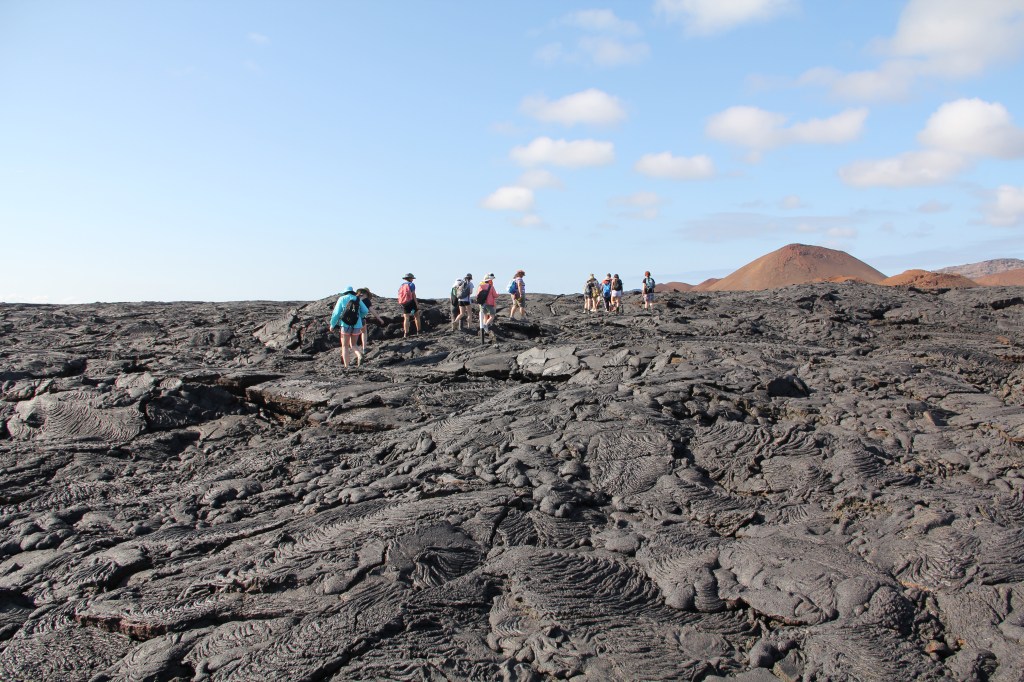
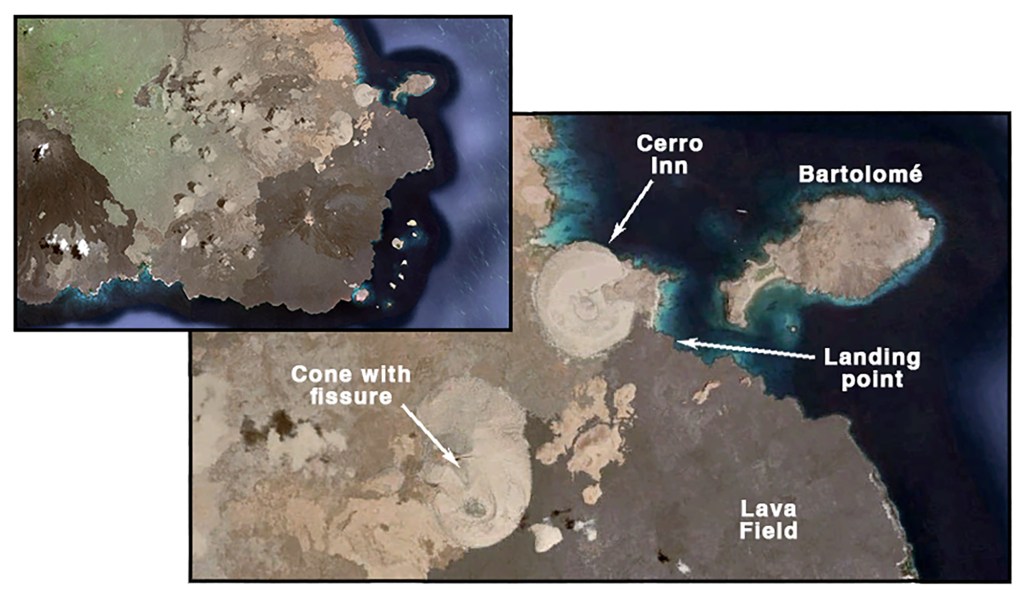

Formed in 1897, the Sulivan Bay lava field is an immense pahoehoe flow that wraps around the southern and eastern sides of Santiago. The site was named in honor of Sir Bartholomew James Sulivan (spelled with only one “l”) who early in his career served as second lieutenant and principal surveyor during the voyage of the Beagle. Bartolomé, just across from the Sulivan Bay landing site, and an important visitor site as well, is also named for Sulivan. After the Beagle Sulivan went on to a distinguished career as a naval hydrographer and Darwin’s life-long friend. For those who walk across the seemingly endless and barren black rippling surface of the lava flow the effect is always profound.
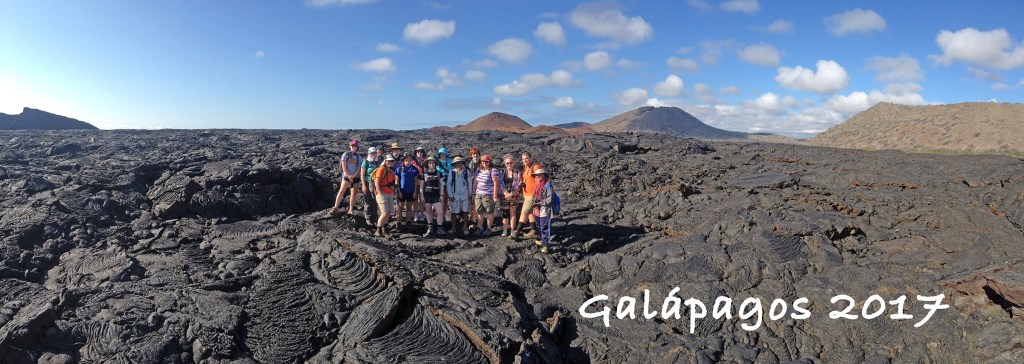
As solid and impervious as the flow seems, looks are deceiving. In a pahoehoe flow, the surface of the flow begins to solidify relatively quickly and just before it is frozen, the viscous surface is twisted into bizarre rope-like shapes. Periodically cracks will form on the surface, permitting lava to leak through, creating squeeze-up-like forms. The solidified shell insulates the lava underneath which continues to flow. Ultimately the lava drains away leaving hollow spaces underneath. Over time the roofs collapse and the flow begins to break apart. Someday the Sulivan Bay field will look like Punta Moreno, a 500 – 1000 year old flow on the west coast of Isabela.
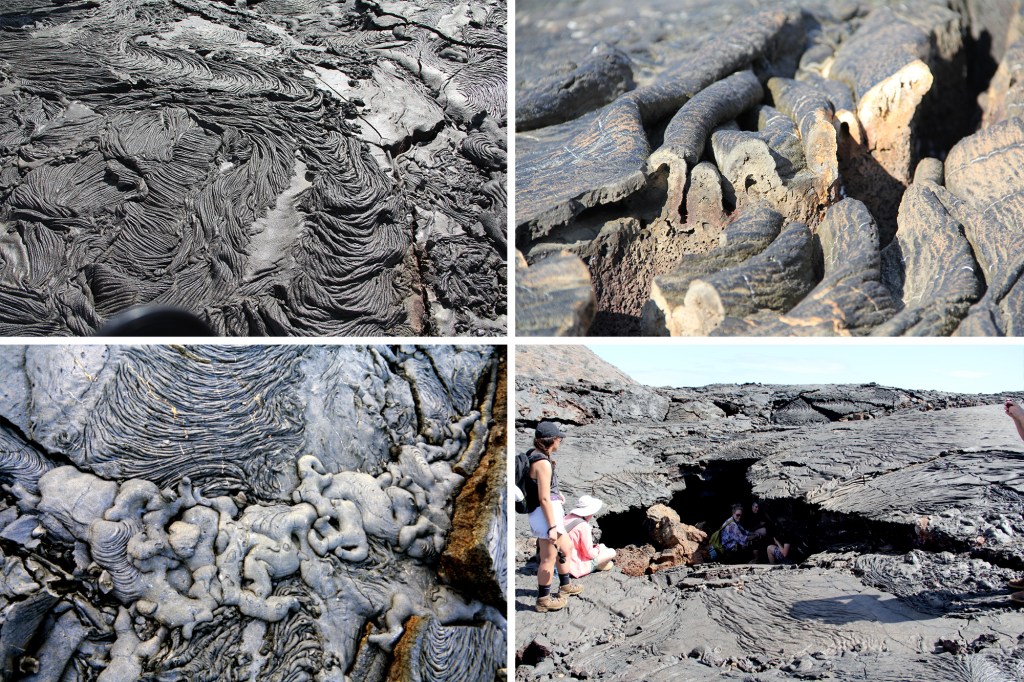
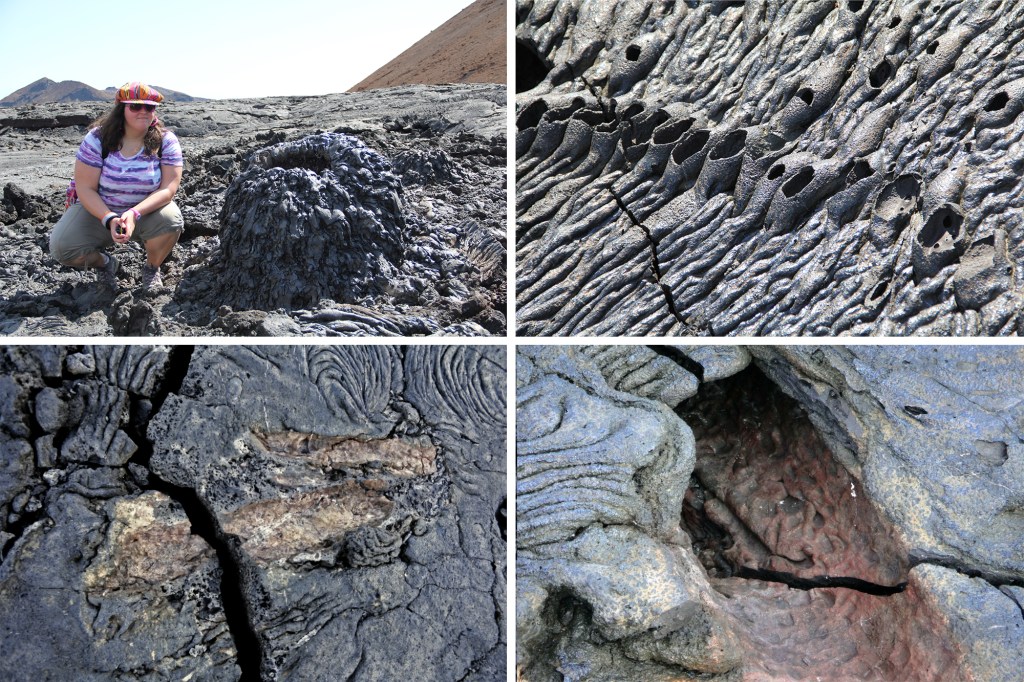
Other features on the flow are hornitos (tiny rootless craters), lava bubbles, and tree molds.
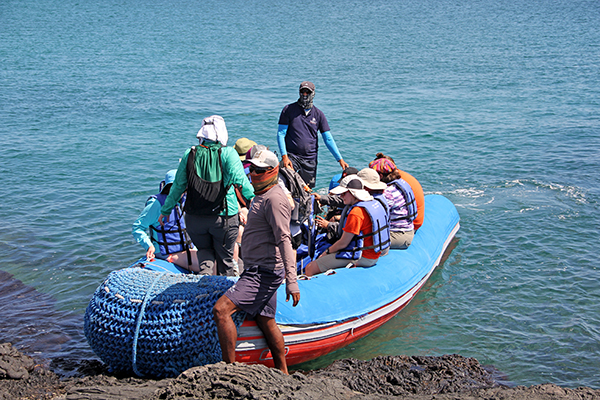
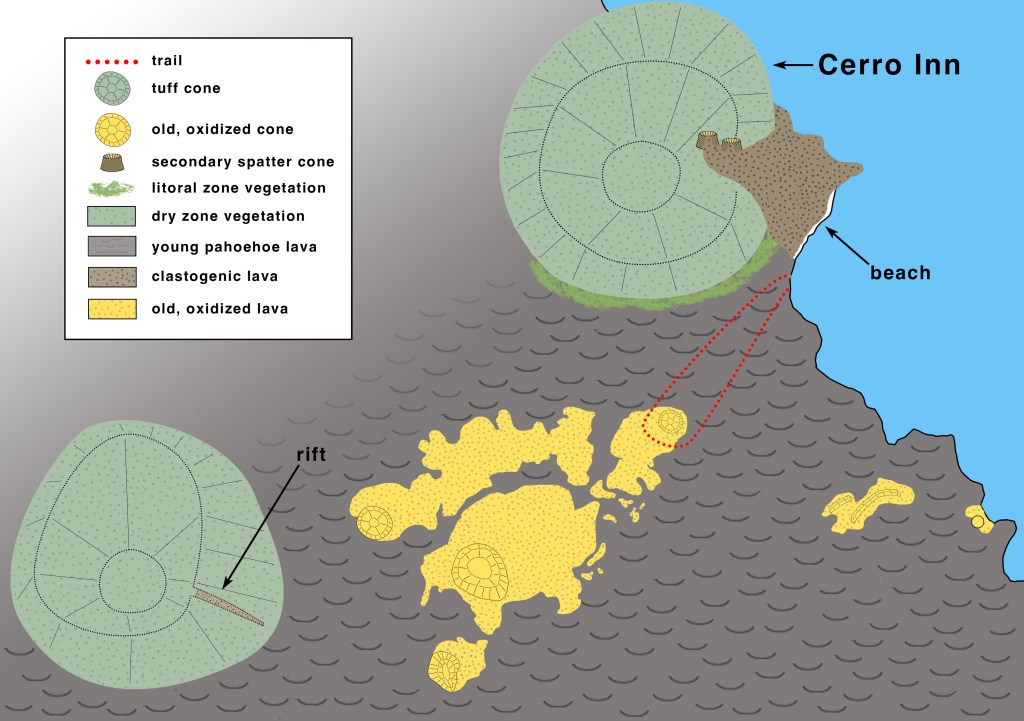
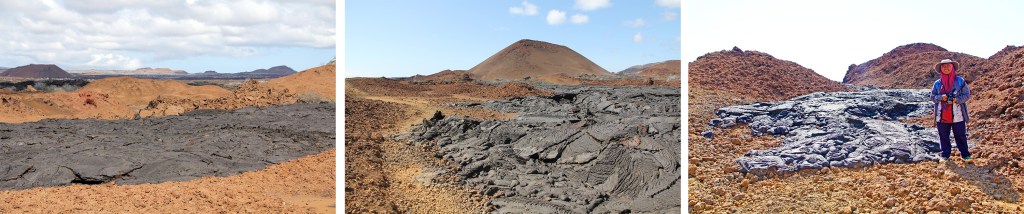
The landing point could be either directly on to the flow, or from the beach in front of Cerro Inn. Or, it could begin at one spot and end on the other. Once on the flow, the trail is marked by wooden posts. However, since you are walking on hard rock, there is not a beaten path. Rather, one simply goes from one post to the next by line of sight. The far end of the trail is an area of much older, oxidized and eroded lava around which the 1897 lava flowed. The surface of the flow is smooth and where not broken, one could easily walk barefoot.
Although barren, the flow is not completely lifeless. Be on the lookout for occasional plants like lava cactus and mollugo. These are frequently the first colonists on a lava field. You might even encounter a lava lizard or a marine iguana by the water’s edge.
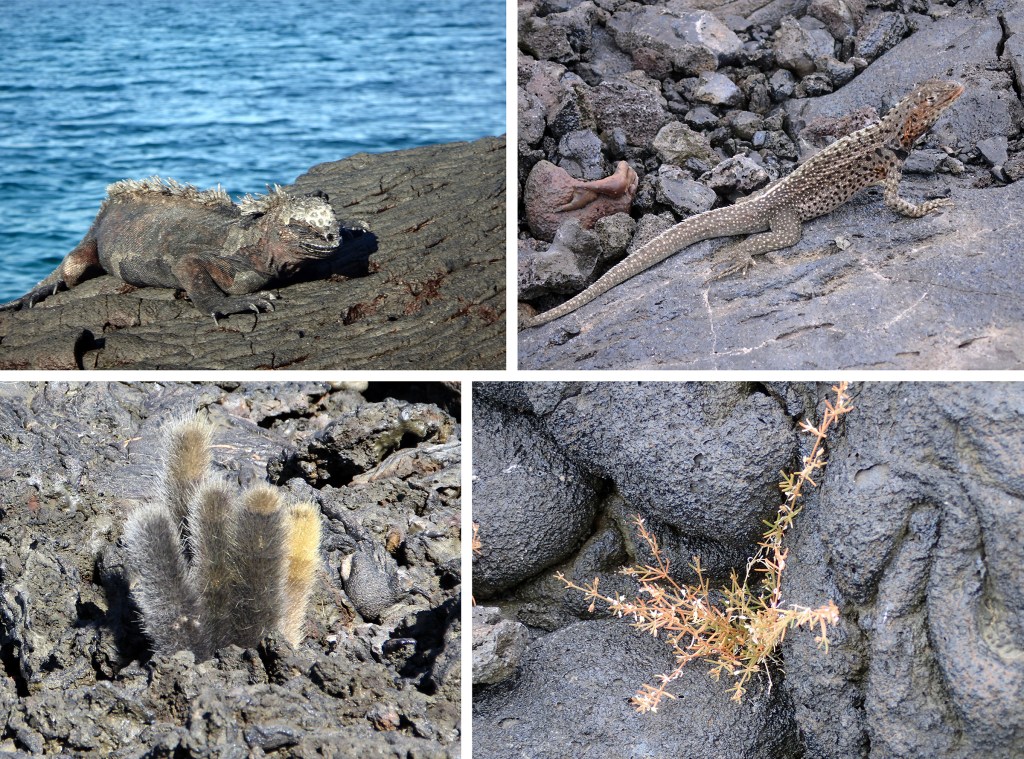
Bottom: Left; Brachycereus nesioticus. Right; Mollugo flavescens
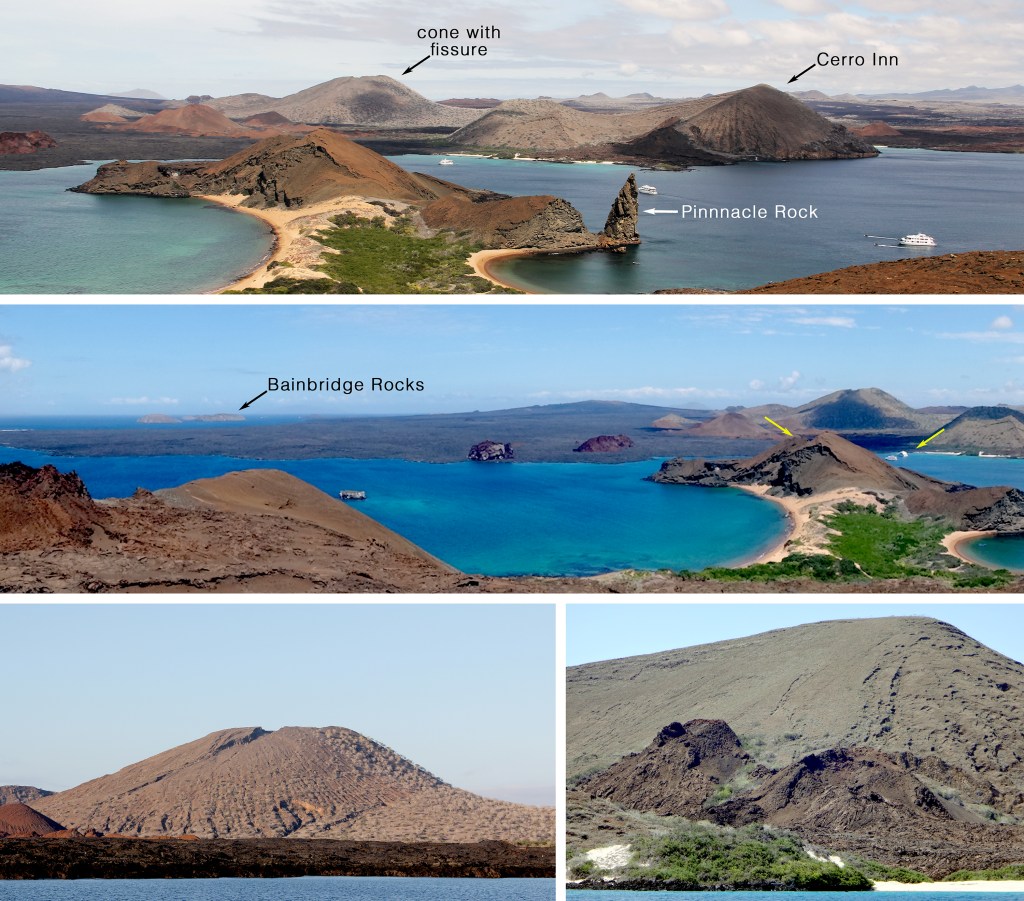
In addition to the lava flow, the field supports several classic tuff cones, the most prominent of which is Cerro Inn. Tuff cones form when a fissure is exposed to water, which flashes to steam, pulverizing the lava, and producing fine-grained cones. Cerro Inn is in the form of a horseshoe because of the strong winds that were blowing during the eruption. At a later date, the cone erupted again but was now protected from the ocean, forming two small spatter cones.
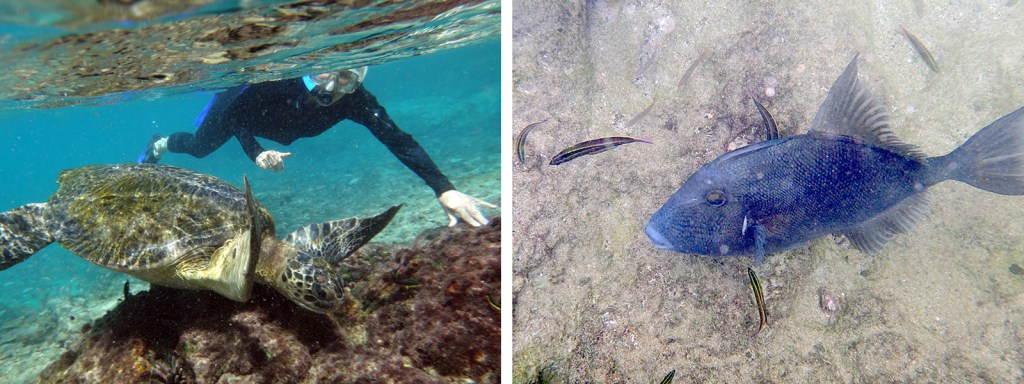
Sulivan Bay is also a venue for snorkeling. On one trip I saw a band of five penguins swimming back and forth under me chasing fish. On one pass they came from behind and as they sped by, I felt one tap me on the shoulder several times with its wing. You might also encounter sea turtles, sea lions, of course, and many interesting fish. My most striking encounter there was a finescale triggerfish (Balistes polylepis), which is only occasional to uncommon across the archipelago.
Occasional Animals:
• Marine iguana (Amblyrhynchus cristatus)
• Lava lizard (Microlophus jacobi)
Common Plants:
• Mollugo (Mollugo Flavescens)
• Lava Cactus (Brachycereus nesioticus)
For more, visit the Lava Flows page on this site.

 Darwin's Galapagos